Why Olive Oil Wins in Our Kitchen
Hello from Camino Alto,
I don’t know about you, but this weather always puts a skip in my step. Sunshine’s good for the soul. I’ve found myself slowing down a bit to take in the crisp, vibrant colors and a breath amidst the chaos of news and events. We appreciate you taking a moment to slow down with us.
One thing that stood out to me this month, in our tumultuous times, is the importance of our power as consumers. Where and how we invest our time, energy, and money ultimately holds more power in our democracy than we sometimes realize.
I was especially struck by Anthropic, the AI company. For many of us who have been following the rapidly growing AI market, it can feel alarming because we don’t know it’s long term impact—environmentally, socially, and economically. Last week, Anthropic made a public statement that they would need to set specific guidelines and restrictions with the Department of War to continue their contract. On several occasions, the CEO has also posted clear guidelines for the public, acknowledging some of the dangers and risks if AI isn’t regulated ethically or morally. In this situation, Anthropic chose to take the high road.
AI, in general, is controversial, but it’s rapidly becoming part of our culture. This level of transparency of Anthropic’s values and thinking was a relief. Life is busy; we don’t have time to do deep dives into everything to understand its impacts.That level of transparency is something we resonate with at Camino Alto. It’s why I continue to push Josh to share our “why”, to take the work out of it for you.
My intention in announcing the newsletter was to take over that piece for Josh, but as we are learning, that’s not always possible. Much of my personal and professional training has focused on big-picture thinking, recognizing patterns, and planning a path forward. One of Josh's superpowers is attention to detail and diving into the science. So, as you can imagine, when I tried to summarize the complexities of industrialized oils, it wasn’t nearly as detailed as it needed to be. After hours of negotiating and stretching both of our comforts, we were able to shape this month’s newsletter together, combining the big picture behind our “why” with the details behind our decision to cook with olive oil. Sometimes you just need to hear it directly from the source…

Thoughtfully presented gentle pressure. Unrelenting gentle pressure. Jessie’s persistence in having me write about why I cook with extra-virgin olive oil (EVOO). Most of the time for stuff like this, I’d rather talk with my food than get preachy on you. But here I am, on my soap box holding up a shiny bottle of magic potion…”gare-own-teed to fix what ails you!”
At Camino Alto, our primary cooking fat is EVOO. We sauté, shallow-fry, roast, marinate, and dress with it. There’s a lot more behind it than what’s included in this letter, but here’s the primer.
I’ll start by acknowledging, I’m probably wrong—at least about something in here. If you’re not buying what I’m selling and you want to find a research paper or meta-analysis to support your opinion, you will. I just googled “research papers saying salads are bad for you” and now I’m never eating salad again. Don’t Google it.
This is a complex topic, but of the few fats we cook with—EVOO, tallow, ghee, coconut oil, and butter—about 90% of our cooking uses EVOO. So for this letter, I’m sticking to the OG.
I’m a sucker for ingredients that have been around a few thousand years without showing signs of harm. The general consensus for the start of humans cooking with olive oil is about 6,000 to 8,000 years ago. For perspective, some religions mark the start of creation just after that. If I was lucky enough to be dining with you back then, since there were no records of people having names yet, I’d probably have to say, “Hey, you, please pass the olive oil.” And you definitely wouldn’t have had a toilet to say goodbye to the olive oil. We’re talking about a long time.
Now let’s compare that to when humans started living with, and dying from, chronic systemic low-grade inflammation: around the 20th century. This might be a good time to Google when seed oils went from lamp fuel to food. Yet, for the arc of domesticated human existence, among other stable fats, we’ve been cooking with this green gold—and as far as its impact on inflammation, well, everything’s been cool. Literally.
Modern industrialized oils are generally produced through an intensive refinement process that uses high heat and chemicals, including hexane and bleach. The bleach is there to keep you from tasting anything. Clever.
This process is objectively harsh because all the antioxidants are used up in the extraction. This means, after heating, degumming, deodorizing, decoloring, de-flavoring, and destroying everything, you’re left with a cocktail of oil and some likely combination of aldehydes, oxidized sterols, trace hexane, and possibly trans fats. Then you heat it again.
EVOO, by contrast, is made by cold extraction. The antioxidants are retained, providing protection when the oil is heated by neutralizing free radicals and other poopy byproducts, stopping the oxidation chain from completion. And the remaining antioxidants get to work inside your body. That’s a twofer.
Then there’s the fat itself. EVOO is predominantly monounsaturated fat (MUFA). This fat is more stable under heat than polyunsaturated fat (PUFA), which is the predominant fat in seed oils, though less stable than saturated fat. And the more stable a fat is, the less likely it is to oxidize,
More MUFAs in cooking oil means less PUFAs, which is important because PUFAs in cooking oils, including olive oil, are predominantly the pro-inflammation kind. The stuff that makes so much of the “not found at a farm” food out there inflammatory. Combine that with EVOO’s ninja antioxidants, and there’s a strong argument for letting olive oil lube your chicken, marinate your meat, babysit your child, or sublet your apartment.
I wish there was more to it than that. Wait, there is.
It tastes insane. Like the stuff of Greek gods. I put it in my morning coffee because I think Zeus probably put it in his morning coffee, and I want to be more like Zeus.
This part is entirely subjective, but I’ve never tasted anything that didn’t taste better, or at least different in a good way, with olive oil. Again, not at all similarly, I’ve never tasted anything that tastes better with any industrialized oil. Neutral, sure. Tasty, no. Imagine the next time you visit a farmers market and instead of an olive oil booth, there was a seed oil booth—want a sample?
Our taste buds should play a role in our decisions around food, and if big agriculture and big food try to mask or hide flavors, it makes it harder for the average consumer to notice. It makes sense to me that a simply derived oil that makes food taste better, and we enjoy on its own, is something we should be consuming. By contrast, we may want to avoid oils that are deodorized and bleached, so they don’t taste like machine lubricant.
So why don’t other restaurants cook with olive oil?
If you run a restaurant, it's reasonable to presume margins are tight. You’re always thinking about how to keep your cost of goods down. You were raised with vegetable oil (seed oil) in your food. You eat food with vegetable oil. You came from a restaurant that used vegetable oil. Just like the other restaurants on your block, you currently use vegetable oil. You never considered, in a meaningful way, other alternatives.
Are you really going to spend nine times what you currently pay for cooking oil?
Whether you use EVOO or soybean oil, you know people will keep eating out. They don’t ask, and they mostly don’t care. And in defense of all those restaurants that cook with industrialized oils, if customers don’t demand change or stop showing up, they don’t think they’re causing any problems. The chef or owner would have to first agree with what I’m laying down, and second, commit to the long game… because it will be painful for a while. So why don’t they cook with EVOO? Because they don’t have to.
If you made it this far, thank you for investing this time and thought into Camino Alto.
We hope to see you soon,
Jessie and Josh Copeland
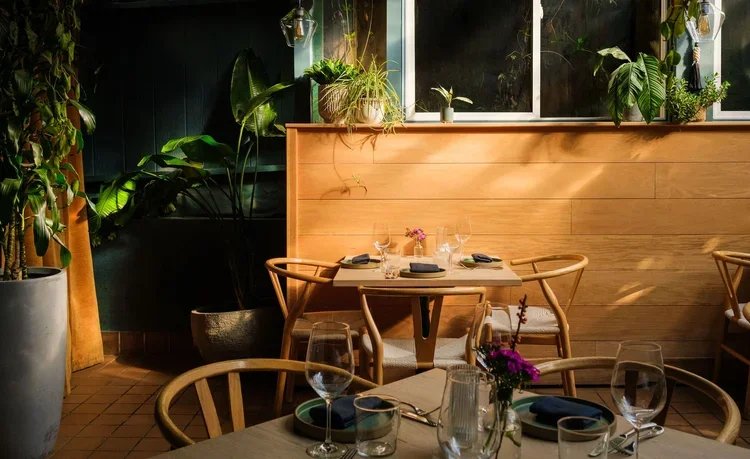
Images courtesy of Krescent Carasso
